If your roof starts leaking during a storm, protect people first: turn off power to wet rooms, catch the water, and relieve a bulging ceiling before it drops. Photograph everything, stay off the roof until the weather clears, and call for an emergency tarp. Make only temporary repairs until your insurer and a roofer have seen the damage.
A leak in the middle of a Gulf storm feels like it needs a hundred decisions at once. It does not. It needs about six, made in the right order. We take emergency calls from Spring, Humble, Kingwood and the rest of north Houston every storm season, and the homes with the smallest repair bills afterward almost always had someone at home who followed a plan like this one.
What should I do in the first hour of a roof leak?
- Check for electrical risk. If water is near light fixtures, ceiling fans or outlets, switch off that circuit at the breaker panel. If the panel itself is wet or you are standing in water, do not touch it; leave the room and call an electrician.
- Catch the water. Buckets, storage bins, a trash can lined with a towel to quiet the dripping. Put plastic sheeting or a shower curtain under the container.
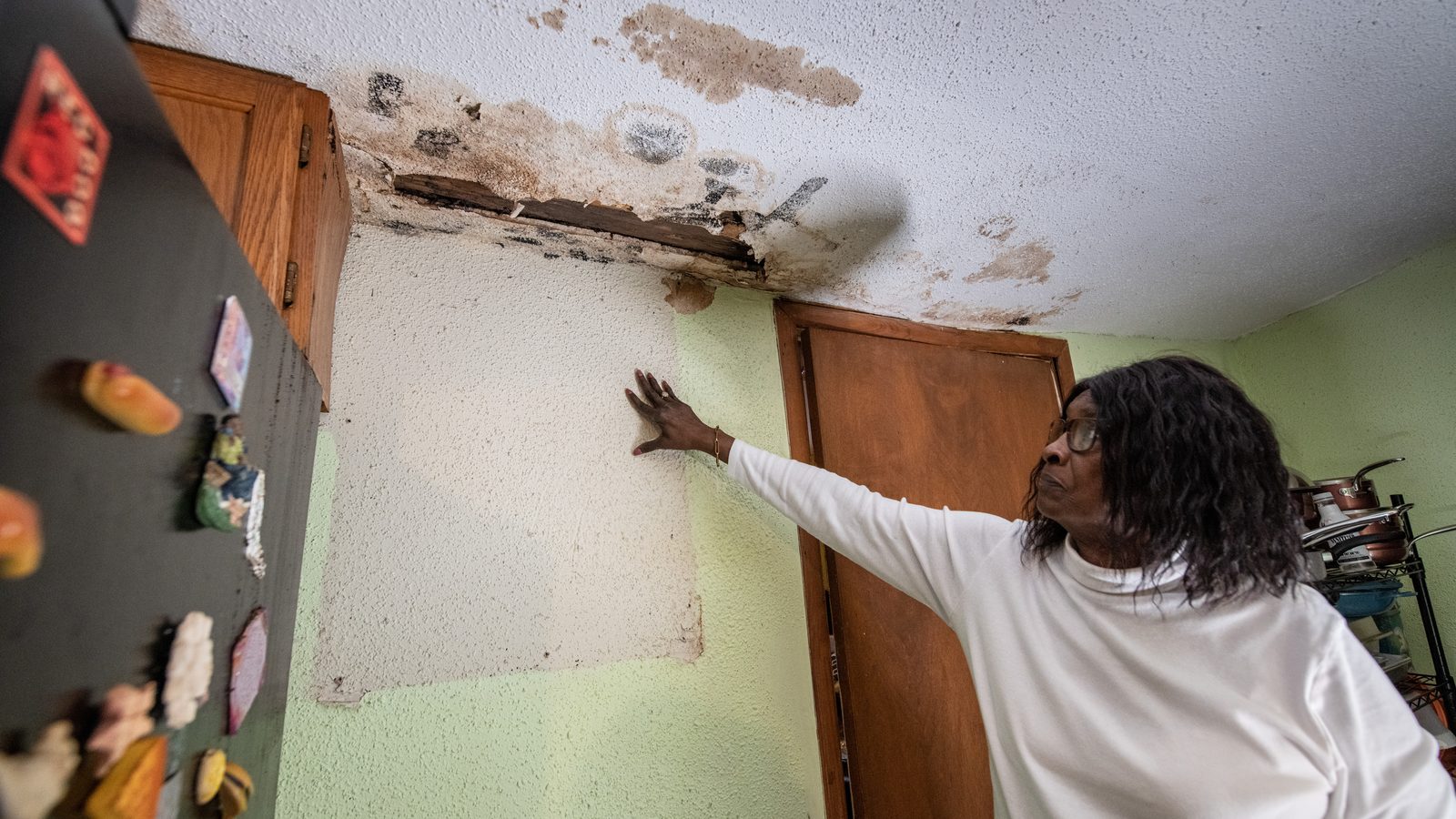
- Look up at the ceiling. A sagging, bulging spot is holding water. Place a bucket under it and pierce the lowest point with a screwdriver so the water drains in a controlled stream instead of bringing the drywall down in one piece.
- Move what you can. Electronics, rugs, documents and furniture go to a dry room. Wipe and prop up what you cannot move.
- Take photos and video of the drip, the stain, the ceiling and the wet belongings before you clean anything up.
- Call for a tarp. Tell us where the water is showing up and roughly when it started. Our emergency tarp service puts active leaks at the front of the line.
Is it safe to go on the roof during a storm?
No. Wind gusts, lightning and wet shingles make a roof one of the most dangerous places to be during or right after a storm, and a panicked climb with a tarp under one arm is how minor leaks turn into hospital visits. Everything a homeowner needs to do in the first 24 hours can be done inside the house. Leave the roof to a crew with fall protection, and only after the weather passes.
Where is the water actually coming from?
Probably not directly above the stain. Water lands on the roof deck, runs along rafters or the underside of the decking, and drops wherever it finds a low point. The most common storm leak sources we trace in Houston homes are:
- Shingles torn off or lifted by wind, exposing the underlayment or deck
- Cracked rubber boots around plumbing vent pipes
- Loose or rusted flashing at walls, chimneys and skylights
- Valleys where debris has dammed the water
- Wind-driven rain pushed sideways through ridge or box vents
- A tree limb that punctured the deck
If the attic is safe to enter, a flashlight often shows wet wood or dripping nails that point toward the real opening. Step only on joists, never on the drywall between them.
What should I photograph and keep for my insurance claim?
The Texas Department of Insurance says it is generally fine to make temporary repairs, but to take pictures of the damage before doing any work and to hold off on permanent repairs until you have talked to your insurance company. In practice, keep:
- Photos and video of the interior damage and, once safe, the outside of the house
- Receipts for buckets, fans, dehumidifiers, tarps and any emergency labor
- Damaged items you plan to claim, until the adjuster tells you they can go (TDI's storm tips say not to throw things away before then)
- A short written log: when the leak started, what you did, who you called
We photograph the damage and the tarp itself for your file. Whether emergency work is covered is your insurer's decision, not ours; we are a roofing contractor, not a public adjuster. Our insurance claim documentation page explains what our reports contain.
How does an emergency roof tarp work, and what does it cost?
A proper emergency tarp is not a sheet of plastic weighted with bricks. We size a heavy tarp to extend past the damaged area, run it over the ridge where possible so water sheds off rather than under it, and fasten it through wood battens so the wind cannot get a grip on the edges. The goal is to keep the house dry until the permanent repair or replacement can be scheduled.
For planning, our 60-second estimate shows a preliminary range of about $350 to $950 for emergency tarping, depending on roof size, pitch, height and how much area needs covering. A firm price comes after we see the roof. A tarp is a temporary fix, measured in weeks rather than seasons, so we line up the permanent roof repair as soon as the weather allows.
What does the first 24 hours look like, hour by hour?
| When | What to do |
|---|---|
| Hour 0 to 1 | Power off to wet areas, catch water, drain a bulging ceiling, move belongings, take photos |
| Hours 1 to 4 | Call for an emergency tarp; notify your insurer and write down the claim number if you decide to report |
| Hours 4 to 12 | Tarp installed once weather permits; start fans and a dehumidifier; pull up soaked rugs |
| Hours 12 to 24 | Check wet insulation and drywall; schedule the full roof inspection and permanent repair |
What should I do after the tarp is on?
Dry the house. The EPA recommends drying water-damaged areas and items within 24 to 48 hours to help prevent mold. Run fans and a dehumidifier, open interior doors and remove soaked carpet pad. Wet attic insulation often has to be replaced, and a ceiling that stayed saturated may need to be opened. Then get the whole roof inspected, not just the spot that leaked. A storm strong enough to open one area often loosened others. If hail came with the storm, our hail storm checklist covers the extra steps.
Storm leak questions
Will homeowners insurance pay for an emergency roof tarp?
Many storm claims include emergency mitigation, but coverage depends on your policy and your insurer's decision. Keep the receipt and the photos, and ask your insurer how it handles temporary repairs.
How long can a roof tarp stay on?
Treat it as weeks, not months. Houston sun and wind wear tarps down, and fasteners can loosen over time. Plan the permanent repair right away and have the tarp checked after any strong wind.
Can I patch the leak myself from inside the attic?
You can catch water and protect belongings from inside, but a patch on the underside of the deck will not stop water coming through the roof surface. The opening has to be closed from above by a crew working safely.
Water coming in right now? Call Storm Bolt Roofing at 832-860-0262 for an emergency tarp, or book a free roof inspection for the repair that follows. Hablamos español.