In our preliminary ranges, an emergency roof tarp in the Houston area typically runs $350 to $950, depending on the size of the damaged area, the roof's pitch and height, and how many sections need covering; the final price is confirmed on site. A properly secured tarp is a temporary fix meant to last weeks, not months, while the claim and permanent repair move forward. Keep the receipt and photos for your insurer.
When a storm opens up your roof, the priority is simple: stop more water from getting in. A tarp does that, but only if it is the right size, laid correctly and fastened so wind cannot get under it. Here is what an emergency tarp involves, what drives the cost, how long it holds, why climbing up yourself is risky, and how to keep the paperwork your insurer will ask for.
How much does an emergency roof tarp cost in Houston?
Our preliminary range for emergency tarping is $350 to $950. Where a job falls in that range depends on a few things we can only confirm on site:
| Factor | Why it changes the price |
|---|---|
| Size of the damaged area | Larger openings need larger tarps, more lumber and more labor |
| Number of areas | Two or three damaged sections take more time than one |
| Roof pitch and height | Steep or two-story roofs need more safety setup and slower work |
| Debris on the roof | Branches or loose material must be cleared before the tarp goes on |
| Roof material | Tile and metal need different handling than asphalt shingles |
A tree that is still resting on the roof usually has to be removed by a tree service before a tarp can go on, and that is a separate cost. Our emergency tarp page and pricing guide explain our ranges further.
What does a proper emergency tarp installation involve?
- Wait until the storm passes. No one should be on a roof during lightning or high wind.
- Photograph the damage first, so there is a record of what the storm did before anything is covered.
- Clear loose debris so it cannot tear the tarp or trap water.
- Size the tarp generously, extending well past the damage on every side.
- Run it over the ridge when possible, so water flows over the tarp instead of under its top edge.
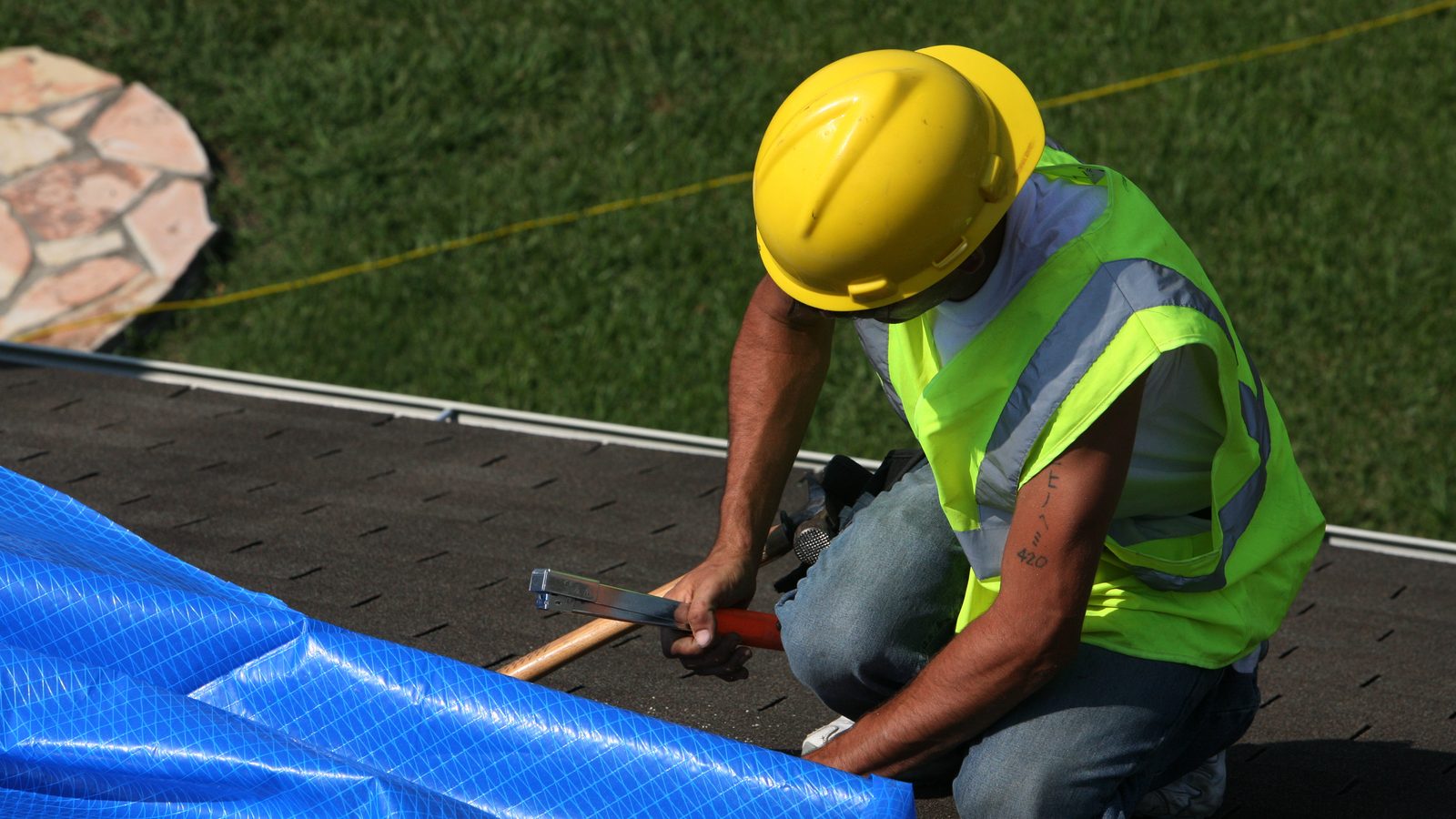
- Secure the edges by fastening them between wood strips so wind cannot peel the tarp back.
- Photograph the finished tarp and note the date and time.
Ask any roofer who tarps your roof to explain how it will be fastened, and to photograph the damage before and after. A tarp held down only with a few bricks or loose nails can blow off in the next storm.
How long does an emergency roof tarp last?
Treat it as weeks, not months. Sun breaks down tarp material, wind works at the edges, and every storm that passes tests it. Check it from the ground after windy weather, and call if you see flapping, sagging pools of water or loose edges. The goal is to protect the house while your insurer reviews the claim and the permanent repair is scheduled. Our roof leak emergency guide covers what to do inside the house during the first 24 hours.
Can I tarp my own roof?
Some homeowners do, but the risks are real:
- Falls. Wet shingles, debris and wind make a storm-damaged roof dangerous, especially on a second story.
- Hidden hazards. Damaged decking can give way underfoot, and downed power lines may be nearby.
- Poor installation. A tarp that stops short of the ridge or is loosely held can funnel water into the house or blow away.
- Extra damage. Walking on damaged shingles or nailing through good ones can add to the repair.
If you choose to do it yourself, never go up during a storm, work with another adult, stay away from power lines, and photograph the damage before you cover it. Keep receipts for the tarp and materials you buy.
Will my insurance pay for an emergency tarp?
Your insurer decides that, based on your policy and the cause of the damage. What we can tell you is what the Texas Department of Insurance advises. In its steps to getting a claim paid, TDI tells homeowners to do what is needed to keep damage from getting worse, like covering it with a tarp or making temporary repairs, and to keep receipts for all expenses. After hail or wind, TDI notes that your policy may pay for temporary repairs. And for water damage, TDI advises making temporary repairs such as a tarp, but not making permanent repairs until your insurance company sees the damage.
What should I keep for my insurance claim?
- The tarp invoice or receipt, showing the date, address and work done.
- Before-and-after photos of the damage and the installed tarp.
- Receipts for anything you bought, such as buckets, fans or materials.
- Photos of interior damage before cleanup.
- Any damaged items until your insurer says you can discard them.
- A simple log of calls with your insurer, with dates and names.
We are a contractor, not a public adjuster, and we cannot negotiate your claim. Whoever tarps your roof, ask for an itemized invoice and photos you can share with your insurer; our free inspections include photo documentation. Our guide to how roof claims work in Texas explains what happens next.
What happens after the tarp is on?
- Report the damage to your insurer as soon as you can, if you have not already.
- Schedule a full inspection of the roof and attic, with photos of every slope.
- Meet the adjuster, and point out the damage and the tarped areas.
- Plan the permanent repair or replacement once your insurer has reviewed the claim.
Emergency tarp questions
Should I call my insurer or a roofer first?
If water is coming in, get the opening covered safely and report the claim as soon as you can; you can do both the same day. Photograph the damage before the tarp goes on.
Can a tarp go on while it is still storming?
No. Lightning, wind and wet surfaces make that too dangerous. Catch water inside, move belongings, and wait until the storm has passed.
Does the tarp company have to do my permanent repair?
No. Paying for a tarp should not commit you to a roofing contract. Read anything you sign carefully, and choose the contractor for the permanent work separately if you prefer.
Storm damage letting water in? See our emergency tarp page, or book a free, photo-documented inspection with no obligation once the storm passes. Storm Bolt Roofing serves Spring and Greater Houston, in English and Spanish.