To get a Houston roof ready for hurricane season, which runs June 1 to November 30, schedule an inspection, fix loose shingles and flashing, trim branches over the roof, clean the gutters and photograph the roof and attic for your records. Then check your wind deductible and roof details on your policy before any storm gets a name.
Most hurricane roof damage we document in north Houston does not start with a dramatic failure. It starts with a shingle edge that was already loose, a pipe boot that was already cracked, or a limb that had been brushing the roof for two summers. Wind finds the weakest point first. A checklist worked through in the calm months takes those weak points away before the Gulf gets busy.
When is hurricane season, and when should I prepare my roof?
The Atlantic hurricane season runs from June 1 through November 30, and the National Hurricane Center tracks every system from its first outlook. The best time to prepare a roof is spring, after hail season has shown you what it did, and before June. The second-best time is now. Late-season storms are real, and a repair done in September still protects you through November.
FEMA's hurricane preparedness guide covers the whole household plan: supplies, evacuation zones, important documents. This article covers the roof part of it.
What should be on my hurricane roof checklist?
| Task | When | Who |
|---|---|---|
| Professional roof inspection, every slope photographed | Spring or early summer | Roofer |
| Re-secure or replace lifted, creased or missing shingles | Right after inspection | Roofer |
| Check flashing at walls, chimneys and skylights; replace cracked pipe boots | Right after inspection | Roofer |
| Confirm drip edge and starter course are secure along eaves and rakes | Right after inspection | Roofer |
| Trim branches overhanging the roof | Before June | Tree service |
| Clean gutters and downspouts; make sure water exits away from the foundation | Before June and again in fall | Homeowner or pro |
| Look in the attic for daylight, stains or damp insulation | Any clear afternoon | Homeowner |
| Take baseline photos of the roof and attic | After repairs are done | Homeowner |
| Review wind deductible, coverage type and roof age on your policy | Before June | Homeowner and agent |
| Save your roofer's number and your claim line in your phone | Now | Homeowner |
Why do roofs fail at the edges in high wind?
Wind flowing over a house creates the strongest uplift at the corners, eaves, rakes and ridge. That is why hurricane damage so often shows as a strip of missing shingles along one edge, or a peeled-back corner, while the middle of the roof is untouched. The details that resist that uplift are small and easy to skip: a proper starter strip with sealant along the eaves, drip edge fastened securely, the right number of nails in the right place on every shingle, and hip and ridge caps sealed down.
Shingles themselves carry wind classifications. Under the standards the roofing industry uses, ASTM D3161 Class F and ASTM D7158 Class H are the highest wind ratings for asphalt shingles. The rating only holds if the shingle is installed to the manufacturer's instructions. If your roof is due for replacement, ask to see the wind rating and the installation requirements for the product you are considering.
Should I photograph my roof before a hurricane?
Yes. A set of clear, dated photos showing your roof in good condition makes it much easier to show what a storm changed. Take pictures of each side of the house from the yard, close-ups of the roof edges you can see, the gutters, and the attic underside with a flashlight. Store them somewhere that will survive a power outage and a wet house, such as cloud storage or an email to yourself. If we inspect before the season, you get our slope-by-slope photo set as your baseline. See how that works on our storm damage page.
What should I check in my insurance policy before a storm?
Three questions for your agent, asked in the calm months:
- What is my wind and hail deductible in dollars? Many Texas policies use a separate deductible for wind and hail, and TDI notes it can raise what you pay out of pocket.
- Is my roof covered at replacement cost or actual cash value? TDI also warns that companies may change coverage at renewal as a roof ages.
- Are my roof's age and material correct on the policy? TDI specifically recommends checking this and telling your insurer when you replace a roof.
Remember that a standard homeowners policy does not pay for flood; TDI lists flooding among the most common excluded damage. Flood coverage is a separate policy, usually through the National Flood Insurance Program.
What should I do when a hurricane is forecast for Houston?
In the last 72 hours before landfall, focus on what can become a projectile or block drainage: patio furniture, trampolines, grills, planters and loose yard items go inside or get tied down. Clear the gutters one last time if you can do it safely from a ladder on dry ground. Do not climb on the roof to add tarps or sandbags ahead of the storm; a tarp that is not properly fastened turns into a sail. Charge your phone, keep your policy number handy and follow the NWS Houston/Galveston office for local warnings.
What happens after the storm passes?
Walk the outside of the house once it is safe and photograph what you see: missing shingles in the yard, bent gutters, fallen limbs on the roof. Check ceilings and the attic for water. If anything is leaking, our guide to the first 24 hours of a roof leak covers what to do inside, and our emergency tarp crew handles the outside. After widespread storms, expect door-knockers; a local contractor with a verifiable address and insurance is worth waiting a day for.
Hurricane roof prep questions
Can I add hurricane straps or clips to my existing roof?
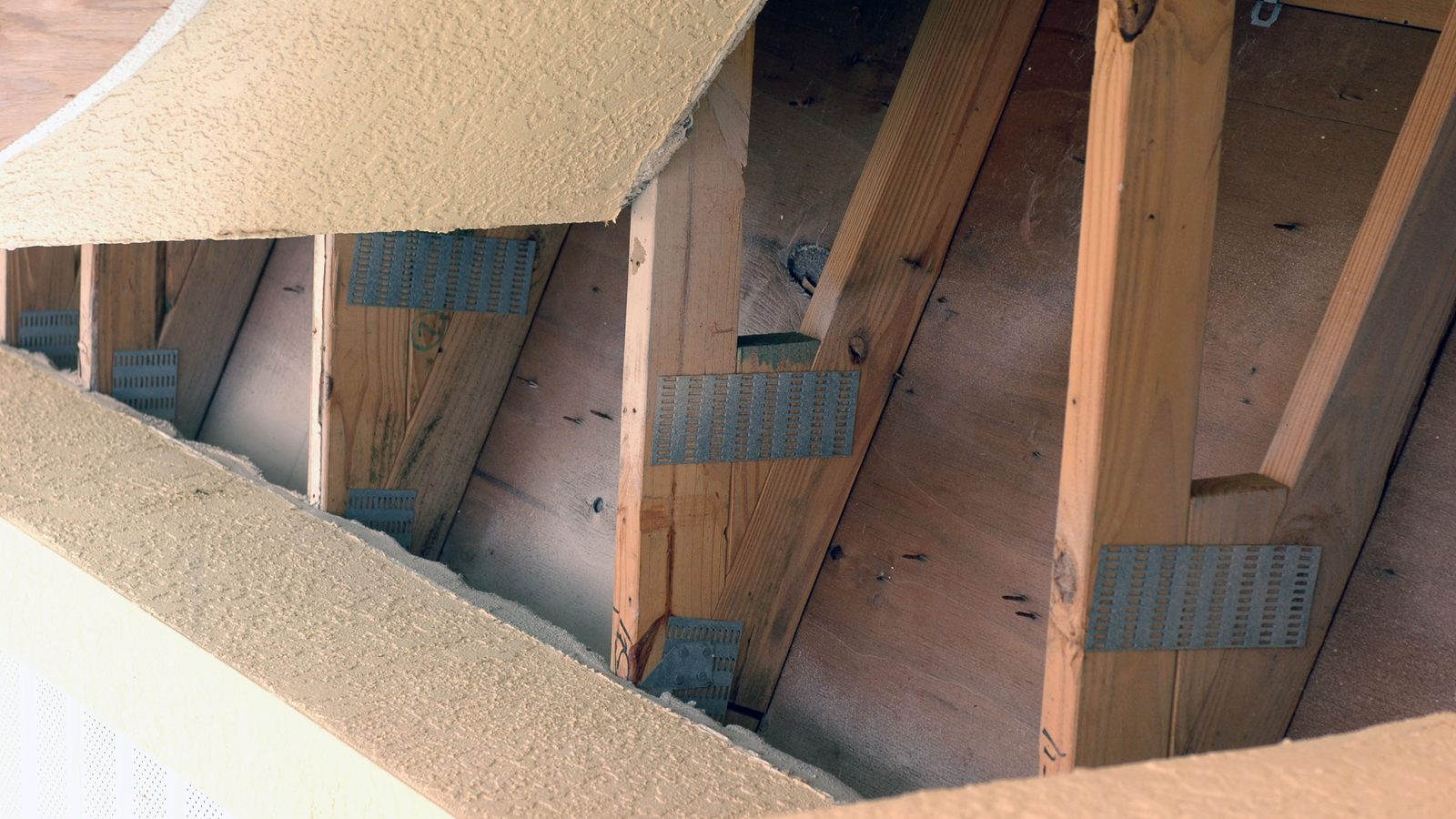
Straps and clips connect the roof framing to the walls, so adding them usually means accessing the framing from the attic or during a re-roof. Whether it is practical depends on the house. Ask during an inspection, and ask your insurer whether it affects your premium.
Should I put a tarp on my roof before a hurricane arrives?
No. A pre-storm tarp over a sound roof adds nothing and can catch the wind. Tarps are for covering real openings after the damage happens, installed and fastened by a crew once the weather clears.
Does homeowners insurance cover hurricane roof damage?
Wind damage may be covered, subject to your wind deductible and policy terms, while flood is not part of a standard policy. Coverage is always your insurer's decision, so confirm the details with your agent before the season.
Get ahead of the next named storm. Book a free pre-season roof inspection with slope-by-slope photos, or call Storm Bolt Roofing at 832-860-0262. Hablamos español.