After a hurricane or tropical storm, return home only when officials say it is safe, stay away from downed lines and floodwater, and check your roof from the ground, not from a ladder. Photograph the damage before cleanup, get openings tarped to stop more water, keep every receipt, and report the damage to your insurer, plus your flood insurer or TWIA if those policies apply. Be careful with contractors who show up at your door.
The days after a storm are exhausting. Power may be out, streets may be blocked and every neighbor is dealing with the same mess. The order in which you do things protects your family first, then your home, then your claim. If you are reading this before a storm, our hurricane season roof checklist covers how to prepare. This guide is for after.
What should I do first after a hurricane passes?
The National Weather Service advises returning home only when officials say it is safe, watching for downed electrical wires and weakened structures, and walking carefully around the outside of your home to check for loose power lines, gas leaks and structural damage. It also warns never to run a portable generator inside your home or garage.
- Stay out if you smell gas, if floodwater surrounds the house or if the structure looks unsafe.
- Treat every downed line as live, and report it to your utility.
- Do not climb onto the roof. Wet, storm-damaged roofs are slippery and may be weakened.
- Shut off power to wet areas at the breaker, but only if you can reach the panel without standing in water.
- Catch drips and move belongings away from leaks once it is safe to be inside.
What does hurricane damage to a roof look like?
Most hurricane roof damage in the Houston area comes from wind, wind-driven rain and flying debris. From the ground, and from inside, look for:
| Where | What to look for |
|---|---|
| Shingles | Missing shingles or ridge caps, shingles that are lifted, creased or folded back, and exposed underlayment or bare wood |
| Edges and metal | Bent or loose drip edge and flashing, damaged vents or turbines, and gutters pulled away from the fascia |
| Debris | Limbs on the roof, punctures, and shingles or metal scattered in the yard |
| Attic | Wet insulation, water stains on decking or rafters, and daylight through the roof |
| Ceilings and walls | New stains, bulging or sagging drywall, and peeling paint |
Damage often concentrates on the slopes that faced the strongest winds and along edges and ridges. Our guide to wind damage on Houston roofs shows what to look for in more detail.
How do I protect my home until repairs?
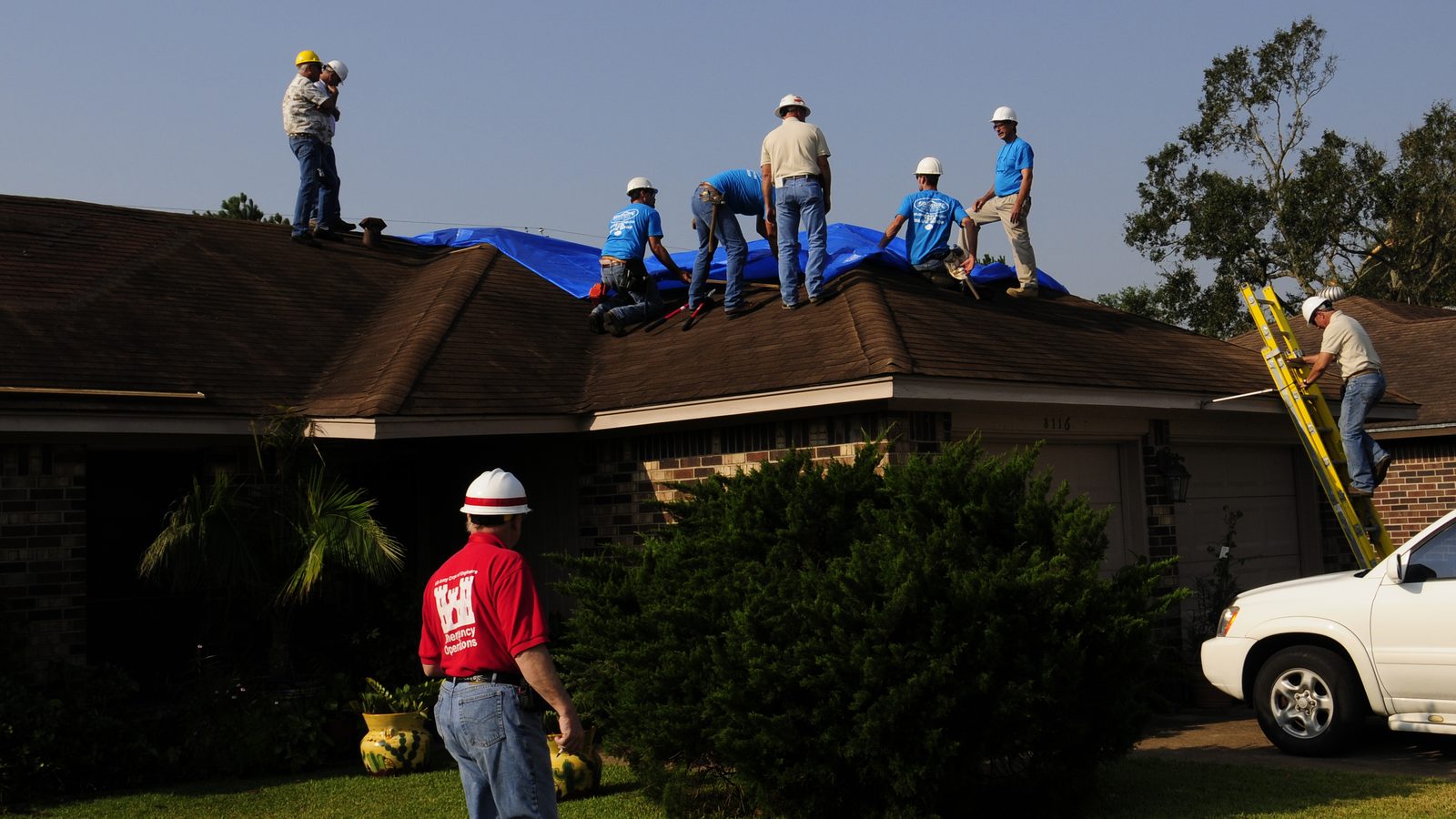
Stopping more water from getting in is the priority. A properly installed tarp should extend past the damage on every side and be firmly fastened. In our preliminary ranges, an emergency tarp typically runs $350 to $950, with the final price confirmed on site. See our emergency tarp page for how it works.
- Make temporary repairs to prevent more damage, but hold off on permanent repairs until you have talked to your insurer.
- Keep every receipt for tarps, water extraction, fans and anything else you buy or hire.
- Dry things out quickly. Wet drywall, insulation and carpet can grow mold fast in Houston humidity.
- After a big storm, demand is high, so ask for a written price before any work starts, even for a tarp.
What should I photograph for my insurance claim?
Before cleanup, and from a safe spot:
- Wide shots of every side of the house and roof, then closer shots of each damaged area.
- Missing shingles, debris and anything that came off the roof and landed in the yard.
- Interior damage: ceilings, walls, floors and belongings.
- Water lines if there was flooding, since flood and wind damage are usually handled by different policies.
- A note of the storm name and date, and the date you took each photo.
How do insurance claims work after a hurricane?
Your insurer decides what is covered, based on your policy. The Texas Department of Insurance notes that depending on your damage and where you live, you may need to file more than one claim:
| Type of policy | What to know |
|---|---|
| Homeowners policy | May cover things like roof damage from a tree and water damage from rain entering through a storm-damaged roof. |
| Windstorm policy | If you have a policy with the Texas Windstorm Insurance Association (TWIA), report wind damage to TWIA. |
| Flood policy | Flood damage is handled by your flood insurer, not your homeowners policy. |
Your deductible applies, and your policy may have a separate deductible for wind and hail, so ask your agent which one applies. Texas Insurance Code Chapter 707 addresses paying your deductible, and TDI warns that it is against the law for a contractor to offer to waive your deductible or work it into a bid. Our guide to how roof insurance claims work in Texas walks through each stage.
How do I avoid storm-chaser scams after a hurricane?
TDI warns that out-of-town scam artists may be the first to arrive at your door after a disaster. Its advice, and ours:
- Get more than one written bid. TDI suggests at least three.
- Do not sign anything with blank spaces, or anything called an "estimate" or "release" just so someone can get on your roof.
- Avoid contracts that assign "the value of insurance proceeds" to the contractor.
- Be wary of large down payments. TDI notes that after a disaster, it is against the law for out-of-town contractors to ask for a down payment before they start.
- Walk away from any offer to waive your deductible.
- Check who you are hiring. Texas has no state roofing license, so ask for a local address, proof of insurance and references you can call.
A contractor can document roof damage for you to share with your insurer, but a contractor cannot act as your public adjuster or negotiate your claim. We are a contractor, not a public adjuster, and your insurer decides every claim.
After-hurricane roof questions
How soon should I report hurricane roof damage?
As soon as you safely can. Most policies require prompt notice, and reporting early gets you in line for an adjuster when demand is high. Keep your claim number and notes of every call.
Can I tarp my own roof after a hurricane?
It is risky. Storm-damaged roofs can be weak and slippery, and a tarp that is not fastened well can blow off in the next squall. If you do cover something yourself, stay on the ground or a secure surface and photograph the damage first.
What if the damage is from both wind and flooding?
Report each to the right insurer: roof and wind damage to your homeowners or windstorm insurer, and flood damage to your flood insurer. Photos that show water lines and roof damage separately help each insurer review its part.
Once the storm has passed and it is safe, book a free, photo-documented inspection with no obligation, or see our emergency tarp page. Storm Bolt Roofing serves Spring and Greater Houston, in English and Spanish.