Dents in gutters and downspouts, spatter marks on AC units and fences, torn window screens, bent AC fins, cracked or chipped siding and dents on cars are all signs that hail was big or hard enough to hit your home, and a good reason to have the roof checked. These collateral clues do not prove the roof is damaged, but they help confirm that a hail event happened and are worth photographing for your insurer. You can check most of them safely from the ground.
Most homeowners cannot see their roof well from the yard, and nobody should climb up after a storm to look. The good news is that the rest of your property tells a story too. Softer materials like aluminum gutters, window screens and AC fins show hail marks clearly, and they are right at eye level.
What is collateral hail damage, and why does it matter?
Collateral damage is hail damage to things other than the roof covering. The Insurance Institute for Business & Home Safety's guide, Is It Hail Damage?, recommends checking for spatter marks or impact dents on items like AC units, gutters, metal flashing, downspouts and even patio furniture. IBHS notes that collateral damage confirms a hail event occurred, which helps distinguish hail damage from normal wear and tear.
That is why collateral clues matter for documentation. They help show that hail hit your property, roughly how big and hard it was, and which direction it came from.
Where should I look for hail damage around my house?
| Item | What hail can leave | How to check safely |
|---|---|---|
| Gutters | Dents along the top edge and face, and fresh spatter marks | Look along the gutter line from the ground; low morning or evening light shows dents best |
| Downspouts | Dings and dents, especially on the side facing the storm | Check at eye level; run your hand gently along the metal |
| Window screens | Small tears, holes or dents in the mesh | Compare screens on each side of the house |
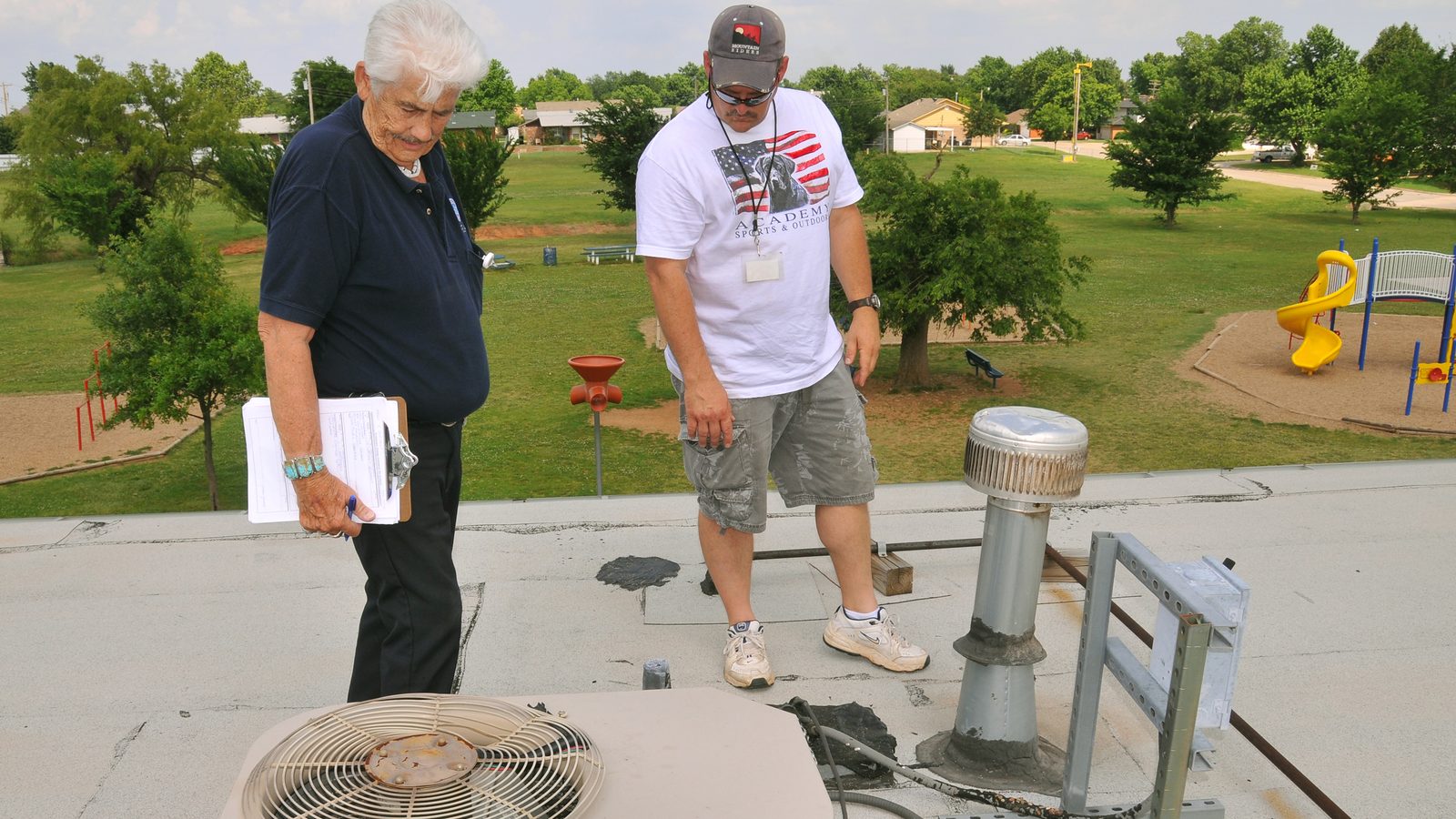
| AC condenser | Bent or flattened fins, and dents on the top or cabinet | Look without touching; do not reach inside the unit |
| Siding and trim | Cracks or holes in vinyl, chips in fiber cement, dents in metal trim, spatter on paint | Walk each side of the house and photograph any marks |
| Fences and decks | Spatter marks on weathered wood, splits or dents | Look for fresh, lighter spots where the weathered surface was knocked away |
| Cars, grills and patio furniture | Dents, cracked windshields, chipped paint | Photograph right away, before anything is moved or repaired |
| Roof vents and metal you can see | Dents on vents, turbines and pipe boots | Use binoculars or your phone's zoom from the yard |
| Plants and yard | Shredded leaves, stripped branches, hail piled against walls | Photograph with a date, and measure a few hailstones if they are still there |
Does the direction of the damage matter?
Yes. NOAA's National Severe Storms Laboratory explains that when surface winds are strong, hail can fall at an angle or even nearly sideways, and that wind-driven hail can tear up siding, break windows and break the side windows of cars. So you may find heavy damage on one side of the house and little on the others. Note which sides show marks, because the roof slopes facing that same direction are the ones most likely to have been hit.
Does collateral damage mean my roof is damaged?
Not necessarily. Aluminum gutters and screens dent more easily than a sound shingle roof. Collateral damage is a strong reason to get the roof inspected, not proof that it needs repair or replacement. The reverse also happens: very little visible collateral damage does not always mean the roof escaped. A roof inspection and, if you file a claim, your insurer's adjuster are what answer the question. Our guide to what size hail damages a roof explains why size, density, wind and roof age all play a part.
How should I document collateral hail damage?
- Photograph soon. Spatter marks, the lighter spots where hail knocked dirt and oxidation off surfaces, can fade with weather and time.
- Take wide and close shots. A wide shot shows where the item is; a close-up with a coin or tape measure shows the dent.
- Work side by side. Photograph each side of the house in order, so the direction of the storm is clear.
- Note old damage. If a gutter was dented before this storm, say so. Honest records are more useful than ones that overstate.
- Record the storm date. NOAA's Storm Prediction Center publishes daily storm reports with hail sizes by location; all reports are preliminary.
- Keep hailstones in a freezer bag if you can, and photograph them next to a ruler.
Car damage is usually handled under your auto policy, and roof and home damage under your homeowners policy, so let each insurer know what applies to it.
Is it safe to check for hail damage myself?
From the ground, yes, with some care:
- Wait until the storm has fully passed and lightning has moved away.
- Watch for broken glass, sharp metal and downed limbs.
- Stay far from any downed power lines and report them to your utility.
- Do not climb a ladder or walk the roof. Hail-damaged roofs can be slippery, and falls cause serious injuries.
- Do not open up or reach into your AC unit. If it is making unusual noises, turn it off and call an HVAC technician.
What should I do after I find collateral damage?
Report the damage to your insurer if you plan to file a claim, and get the roof inspected. We are a contractor, not a public adjuster: we can photograph and document what is on your roof for you to share with your insurer, and your insurer decides what is covered. Our after-the-hail-storm guide covers the next steps, and our guide to the roof adjuster inspection explains what happens when the adjuster visits. If repairs are needed, in our preliminary ranges roof repairs run $450 to $1,900 or more and a full asphalt replacement about $375 to $650 per roofing square, confirmed after inspection.
Collateral hail damage questions
My gutters are dented but my roof looks fine from the ground. Should I get it checked?
It is worth it. Hail marks on shingles are hard to see from the ground, and damage is often heavier on the slopes facing the storm. An up-close inspection is the only way to know.
How long do spatter marks last?
It varies. They can fade as surfaces weather and get dirty again, which is why photographing them soon after the storm is so useful.
Should I repair my gutters or AC before the adjuster comes?
Photograph everything first and ask your insurer before making permanent repairs. If an AC unit is not working, call an HVAC technician for safety, keep the report and photograph the damage before anything is fixed.
Found dents after a storm? Book a free, photo-documented inspection with no obligation. Storm Bolt Roofing serves Spring and Greater Houston, in English and Spanish.