After a tornado, safety comes first: stay clear of downed power lines, damaged structures and debris, and follow local officials. Once it is safe, photograph the damage, get openings in the roof covered to keep rain out, and contact your insurance company to start a claim. Be cautious with anyone who shows up at your door pressuring you to sign, and let a roofer inspect the roof rather than climbing up yourself.
Tornadoes are less common in the Houston area than in the Plains, but they do happen here, including during tropical storms and hurricanes. Even a brief, weak tornado can peel shingles, drop trees and throw debris into roofs across a neighborhood. The hours and days afterward are stressful. This guide walks through what to do in order, so nothing important gets missed.
When do tornadoes happen around Houston?
NOAA's National Severe Storms Laboratory notes that tornadoes can happen at any time of year and at any time of day or night, and that on the Gulf Coast, tornado season comes earlier in the spring than the May-to-early-June peak in the southern Plains. Tornadoes have been reported in all 50 states. For Southeast Texas, that means paying attention to severe weather forecasts in spring, during tropical storms and hurricanes, and any time a strong storm line moves through.
What should I do first after a tornado?
Ready.gov's tornado guidance for after a tornado includes:
- Pay attention to emergency alerts, NOAA Weather Radio and local authorities for updated information.
- Stay clear of fallen power lines or broken utility lines.
- Save phone calls for emergencies and use text messages or social media to reach family and friends.
- Wear thick-soled shoes, long pants and work gloves during cleanup.
- Use appropriate masks if cleaning mold or other debris.
A few roof-specific cautions:
- Do not go on the roof. Damaged decking, loose debris and wet surfaces make it dangerous.
- Stay out of rooms with sagging ceilings or where a tree or debris has come through.
- Turn off electricity to areas where water is coming in, if you can do so safely.
- If you smell gas, leave and call for help from a safe distance.
What kinds of roof damage do tornadoes cause?
| Type of damage | What it looks like | Why it matters |
|---|---|---|
| Missing or lifted shingles | Bare spots, exposed underlayment, shingles in the yard | Rain can get in quickly through exposed areas |
| Debris impacts | Punctures, gouges, branches or objects stuck in the roof | Holes can go through the decking into the attic |
| Fallen trees or limbs | Crushed sections, sagging rooflines | Can damage framing, not just shingles |
| Edge and ridge damage | Peeled drip edge, missing ridge caps, lifted starter rows | Wind that gets under the edge can peel more of the roof |
| Flashing and vents | Bent or torn flashing, missing vent caps, damaged pipe boots | Common leak points after high winds |
| Structural damage | Roof sections lifted or shifted, gaps at walls | A safety issue that needs professional evaluation |
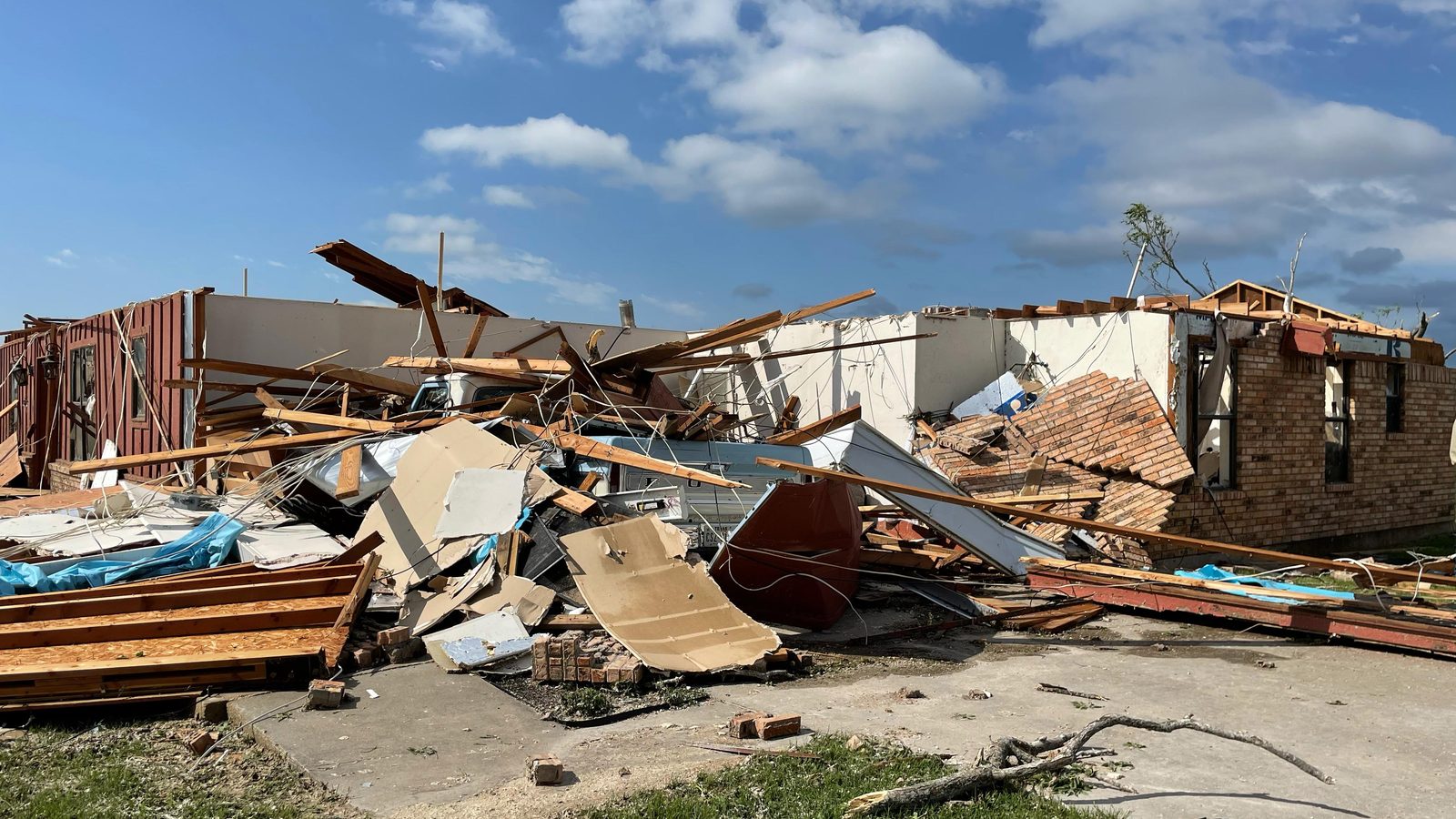
Some damage is obvious from the street. Other damage, like creased shingles that were lifted and resealed or small punctures, is only visible up close. Our guide to wind damage on Houston roofs explains what to look for.
How do I protect my home from more damage?
The priority is keeping rain out. The Texas Department of Insurance explains that it is generally OK to make temporary repairs, but not to make permanent repairs until you have talked to your insurance company, and to take pictures of the damage before doing any work.
- Tarp openings. A properly secured tarp over missing shingles or holes can limit water damage until repairs are made. In our preliminary ranges, an emergency tarp typically runs $350 to $950, confirmed on site. Our article on emergency roof tarp cost explains what affects the price.
- Protect the inside. Move belongings away from leaks, set out buckets and towels, and cover furniture.
- Dry wet areas quickly. Use fans and remove soaked items where possible to help prevent mold.
- Keep receipts for tarps, supplies, water extraction and any hotel stays.
How should I document tornado damage?
- Photograph and video every side of the house from the ground before cleanup.
- Take close-ups of damaged areas, fallen trees, debris and anything that hit the house.
- Photograph interior damage: ceilings, walls, floors and belongings.
- Write down the date and time of the storm and what you saw.
- Back up the photos somewhere other than your phone.
Our guide to documenting roof damage for insurance has a full checklist.
When should I call my insurance company?
As soon as you and your family are safe and you have documented what you can. Most policies expect prompt notice. When you call:
- Get a claim number and write down who you spoke with.
- Ask what they need from you and whether they want temporary repairs made.
- Ask when an adjuster will inspect, and try to be there when they do.
Your insurer's adjuster inspects the damage and your insurer decides what is covered and what is paid. We are a roofing contractor, not a public adjuster. We can inspect the roof and provide photo documentation you can keep and share if you choose, but we do not negotiate or handle claims.
How do I avoid storm scams after a tornado?
TDI warns that out-of-town scam artists may be the first to arrive at your front door after a disaster. Its tips include:
- Get more than one written bid, on company letterhead with a phone number and address.
- Read every document carefully, and do not sign a contract with blank spaces or one presented as just an estimate or a release to get on your roof.
- Be wary if a contractor asks for a large or full down payment. After a disaster, TDI says it is against the law for out-of-town contractors to ask for a down payment before they start.
- Walk away from offers to waive your deductible; TDI says that is against the law.
Also be cautious with anyone who guarantees how your claim will turn out or says they will deal with your insurer for you.
Tornado roof damage questions
Is it safe to go on my roof after a tornado?
No. Damaged decking, debris and wet surfaces make it dangerous. Photograph what you can from the ground and let a roofer or your insurer's adjuster inspect the roof.
Can I tarp my roof before the adjuster comes?
TDI says it is generally OK to make temporary repairs, like a tarp, but not permanent repairs until you have talked to your insurance company. Photograph the damage before any work and keep receipts.
Does homeowners insurance cover tornado damage to a roof?
Many homeowners policies include wind coverage, but every policy is different and your insurer decides what is covered. Check your policy and ask your insurer or agent.
Tornado or strong storm damage? Book a free, photo-documented inspection with no obligation, or see our emergency tarp page if water is coming in. Storm Bolt Roofing serves Spring and Greater Houston, in English and Spanish.