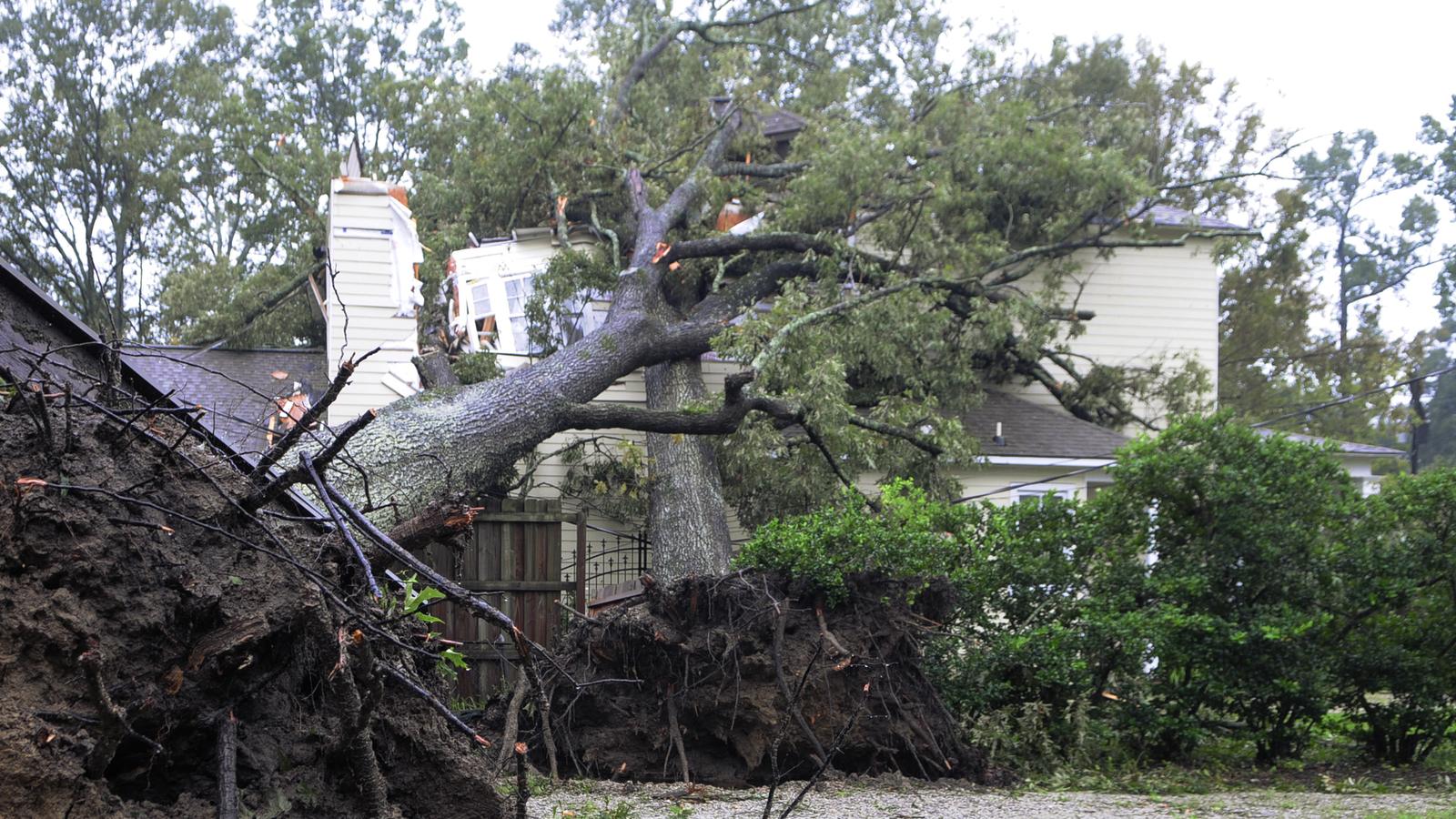
If a tree falls on your roof, get everyone out of the affected rooms, stay away from downed power lines, and call 911 if anyone is hurt or you smell gas. Once it is safe, photograph the damage before anything is moved, report it to your insurer, have a tree service remove the tree, and get the opening tarped to keep rain out until permanent repairs.
Houston's big oaks and pines are part of what makes our neighborhoods beautiful, until a storm drops a limb or a whole trunk onto the house. It is frightening, and it is easy to rush. The order in which you do things matters for your family's safety, for limiting water damage, and for your insurance claim. Here are the steps, in order.
What should I do first when a tree falls on my house?
- Get people out of the rooms under the damage. If you see a sagging ceiling, cracking sounds or a bowed wall, leave the house until someone qualified has checked the structure.
- Call 911 for injuries, fire or trapped people.
- Stay clear of power lines. Ready.gov advises watching for fallen power lines and trees and reporting them immediately. Assume any downed line is live, and keep kids and pets away.
- If you smell gas, leave the house and call your gas company or 911 from a safe distance.
- Shut off electricity to wet areas at the breaker, but only if you can reach the panel without standing in water.
- Catch water and move belongings away from leaks once the area is safe to enter.
Who should I call after a tree hits my roof?
| Who | When | Why |
|---|---|---|
| 911 | Injuries, fire, trapped people, or lines arcing | Emergency response |
| Your electric or gas utility | Lines down, meter damaged or gas smell | Make the site safe for everyone who works on it |
| Your insurance company or agent | As soon as you can after everyone is safe | Start the claim and ask what your policy covers |
| A tree removal service | After utilities are safe | Remove the tree from the roof safely |
| A roofer | After or alongside tree removal | Tarp the opening, then inspect and document the roof |
Should I remove the tree myself?
No. Cutting a tree that is resting on a roof is one of the most dangerous jobs in storm cleanup. The trunk can shift or roll as it is cut, branches under tension can snap back, and the roof below may already be weakened. A tree service with the right equipment can lift sections off without dropping them through the roof. Ask for proof of insurance before they start, and get a written price.
What should I photograph before anything is moved?
The Texas Department of Insurance advises taking photos of the damage before you move the tree, make repairs or take other steps to prevent more damage. From a safe spot, get:
- Wide shots of the tree on the house from several angles, showing where it came from.
- Close-ups of the roof, gutters, siding, windows and fence where the tree made contact.
- Interior damage: ceilings, walls, flooring and belongings, before cleanup.
- The stump or broken trunk, which can show whether the tree snapped in the storm.
- The date and time, and a note of the weather that day.
When does the roof get tarped?
Usually after the tree is off the roof, because a tarp cannot seal around a trunk. Once the tree is removed, the opening should be covered promptly to limit water damage, and the tarp should run past the damage on every side and be firmly fastened. In our preliminary ranges, an emergency tarp typically runs $350 to $950, with the final price confirmed on site; tree removal is separate. Our emergency tarp page explains the process, and our roof leak emergency guide covers what to do inside while you wait.
Will homeowners insurance pay if a tree falls on my roof?
Your insurer decides, based on your policy. TDI explains that many policies pay for damage from falling objects like trees, and that a homeowners policy may cover roof damage from a tree, water damage from rain entering through a storm-damaged roof, and additional living expenses if you cannot stay in the house. A few more points from TDI:
- Tree removal: many policies provide some coverage to remove trees that fell in a storm and damaged the house or block the driveway. Trees that fall in the yard without hitting anything usually are not covered.
- A neighbor's tree: the neighbor's policy probably will not pay unless the neighbor was at fault, because a neighbor is not responsible for an act of nature. You can file under your own policy.
- Temporary repairs: make them to prevent more damage and save your receipts.
Your deductible applies, and your policy may have a separate wind and hail deductible. Ask your agent which one applies to your claim.
What happens after the emergency is under control?
- Get a full inspection. A falling tree can crack rafters or trusses and damage decking well beyond the visible hole. For major structural damage, your insurer or contractor may recommend a structural engineer.
- Meet the adjuster. Show the photos you took before the tree was moved, the tree service and tarp invoices, and the interior damage.
- Review the insurer's decision and scope before permanent repairs begin.
- Repair or replace the damaged section. In our preliminary ranges, repairs run $450 to $1,900 or more, and a full asphalt replacement about $375 to $650 per roofing square, confirmed after inspection.
We are a contractor, not a public adjuster. We can photograph and document the roof damage for you to share with your insurer, but your insurer decides coverage and payment. Our guide to how roof claims work in Texas explains each stage.
Fallen tree questions
Can I stay in my house after a tree falls on it?
Only if the structure is safe, the utilities are safe and the damaged area is closed off. If there is sagging, cracking or exposed wiring, stay elsewhere until it is checked. Ask your insurer about additional living expenses and keep receipts.
My neighbor's tree fell on my roof. Whose insurance pays?
Usually your own. TDI notes the neighbor's policy probably will not pay unless the neighbor was at fault. Report it to your insurer, and let the insurers sort out any fault question.
Should I trim trees near my roof to prevent this?
Yes. Trimming limbs that hang over the roof, and having a tree service look at trees that lean toward the house or show dead wood, lowers the risk. Do it before storm season, not after.
Tree damage on your roof? Once the tree is off and it is safe, book a free, photo-documented inspection with no obligation, or see our emergency tarp page. Storm Bolt Roofing serves Spring and Greater Houston, in English and Spanish.