It depends on your policy, and your insurer decides. In general, the Texas Department of Insurance explains that home policies cover sudden and accidental damage but not gradual leaks, wear and tear or worn roofs. A leak that starts when hail, wind or a falling limb opens the roof is the kind of loss insurers review as storm damage; a leak from an aging roof usually is not. Flood needs a separate policy, and mold coverage is limited.
Water on the ceiling after a Houston storm raises two questions at once: how do I stop it, and will insurance help pay for it? This guide covers the second question. It explains the difference between storm damage and wear, how policies tend to treat rain, interior damage, flood and mold, and what to document so your insurer can decide. It is general information, not a promise of coverage; your policy's wording controls.
If water is coming in right now, start with our roof leak emergency steps and come back to this later.
When might insurance cover a roof leak?
TDI's guide to water damage and mold coverage explains that most home policies cover sudden and accidental water damage and usually don't cover damage from gradual leaks or seepage. For a roof, that usually means the insurer looks at what caused the opening:
- A storm event: hail that fractures shingles, wind that lifts or tears them off, or a tree limb that punctures the deck.
- Sudden timing: the leak showed up during or right after a dated storm, not slowly over months.
- A covered cause under your policy: each policy lists what it covers and excludes, so the same leak can be treated differently under two policies.
Even when the cause is covered, your deductible applies, and the payment may be figured on actual cash value or replacement cost depending on your policy.
Why are wear-and-tear leaks usually not covered?
TDI lists wear and tear among the things a home policy won't cover, naming examples like rotted boards and worn roofs. Leaks that usually trace back to age or maintenance include:
- Cracked or dried-out pipe boots and vent collars.
- Flashing that has pulled away or rusted over the years.
- Shingles that have lost most of their granules from age and sun.
- Clogged gutters that back water up under the roof edge.
- Stains that have grown slowly for months.
Storm damage and old damage can sit on the same roof, and that is where careful documentation matters. Our guide to hail damage vs normal wear shows how the two look different.
What about wind-driven rain and interior damage?
Policies differ on rain. Many homeowners policies are written so that rain damage inside the house is reviewed differently depending on whether wind or hail first created an opening in the roof or walls. Rain that blows in through an open window or a vent with no storm damage may be treated differently from rain that comes through a hole the storm tore in the roof. Read the water and rain wording in your policy, or ask your agent how it applies to you.
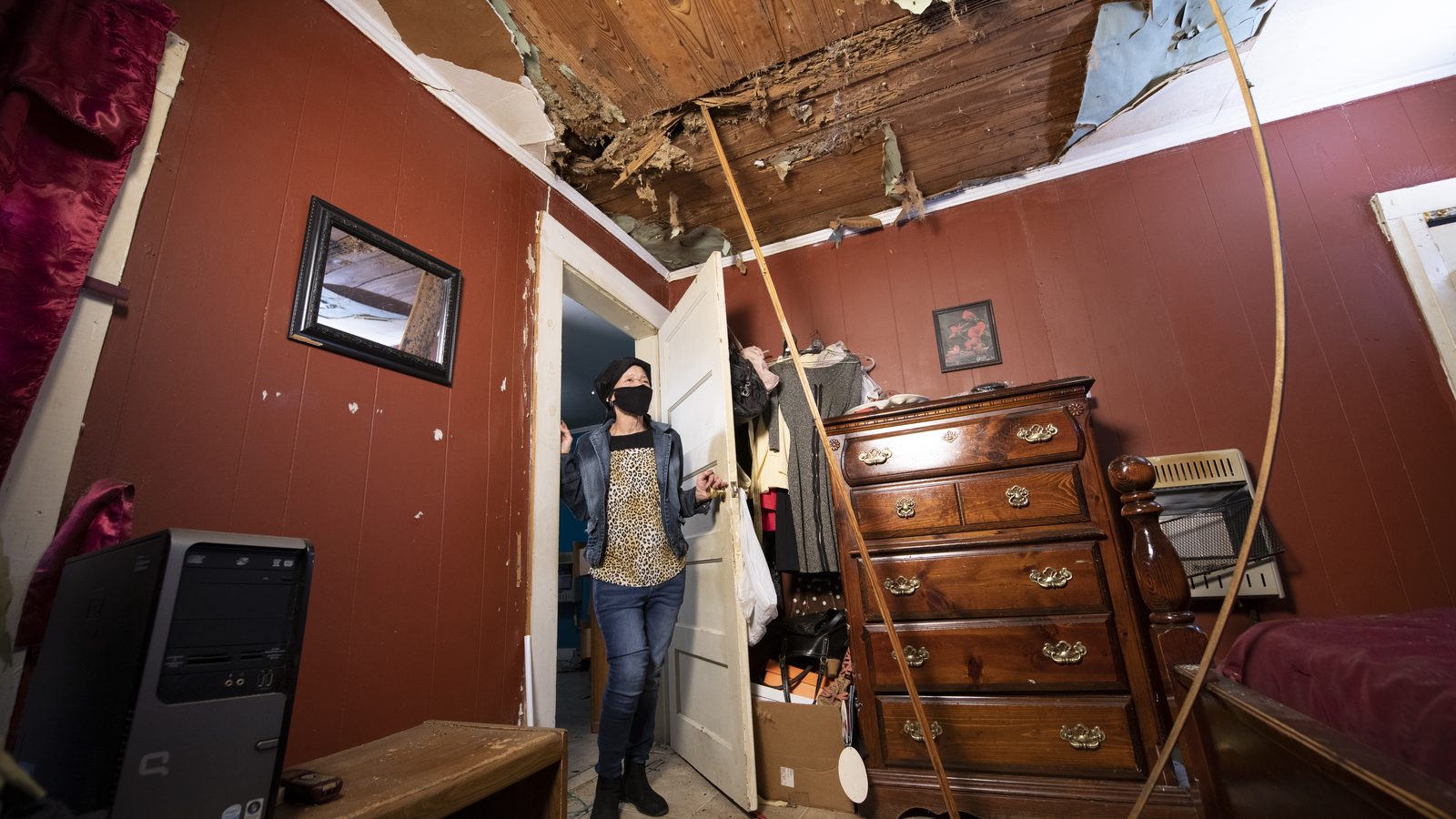
Interior damage such as wet drywall, insulation, flooring and belongings may fall under different parts of the policy than the roof itself. Your policy also expects you to protect the property from further damage. TDI advises stopping the leak, drying things out quickly and making only temporary repairs until the adjuster has seen the damage. A secured emergency tarp is a temporary repair; keep the invoice and photos, and your insurer decides whether it is reimbursed.
Is flood water from a storm covered by homeowners insurance?
No. TDI states that home policies don't cover floods, and FEMA explains that flood insurance is a separate policy, most often through the National Flood Insurance Program. Water that rises from the ground is flood; water that comes through a storm-damaged roof is a different kind of loss, and the adjuster decides which one caused what. According to the NFIP's FloodSmart site, a new flood policy typically has a 30-day waiting period, with some exceptions, so it is something to buy before hurricane season, not when a storm is on the map.
Does insurance pay for mold after a roof leak?
Only in limited cases. TDI explains that if mold grows on something damaged by a covered water loss, it would be covered, but most policies don't cover mold from gradual leaks or seepage, and mold from a flood is not covered by a home policy. TDI's home insurance guide adds that policies won't cover mold removal except to repair damage caused by a covered risk, and some policies cap mold coverage. The practical takeaway: TDI advises removing water and drying wet areas quickly, because mold can start fast, and a delay can shrink what is covered.
What should I document, and how does the insurer decide?
- The storm: date and time, and any hail or wind you saw or heard.
- The inside: dated photos and video of stains, drips, wet insulation and damaged belongings, before cleanup.
- The outside: what you can safely see from the ground, such as missing shingles, dented gutters and debris.
- Your mitigation: receipts for tarps, fans, buckets and emergency work.
- Your calls: claim number, names, dates and what the insurer asked for.
- The roof itself: close-up photos of the opening from a contractor, with measurements.
Our guide on how to document roof damage for insurance covers this step by step.
How the insurer decides: the adjuster reviews the damage, looks for the cause, and compares it with your policy's coverages, exclusions and deductible. You can share your photos and a contractor's documentation, and TDI says that if you disagree with the adjuster's estimate, you can tell the insurer why. At your request, we can be present at the adjuster inspection to answer construction questions; we don't negotiate. See how to prepare for a roof adjuster inspection. For questions about how your insurer is handling a claim, TDI's Help Line is 800-252-3439.
Roof leak coverage questions
Will my insurance pay to fix the roof and the ceiling?
It depends on your policy and on what caused the leak. If the insurer finds a covered storm opened the roof, it may consider both the roof and the interior damage, minus your deductible. Your insurer decides.
Is an old roof leak ever covered?
Leaks from age, wear or poor maintenance are usually excluded. An older roof can still take real storm damage, which is why dated photos matter.
Should I wait for the adjuster before tarping?
No. TDI advises protecting your home from further damage and making temporary repairs. Photograph the damage first, keep receipts and hold off on permanent repairs until the insurer has seen it.
Water getting in after a storm? Book a free, photo-documented inspection with no obligation, or call 832-860-0262 for an emergency tarp. Storm Bolt Roofing serves Spring and Greater Houston, in English and Spanish. Coverage depends on your policy, and your insurer decides every claim.